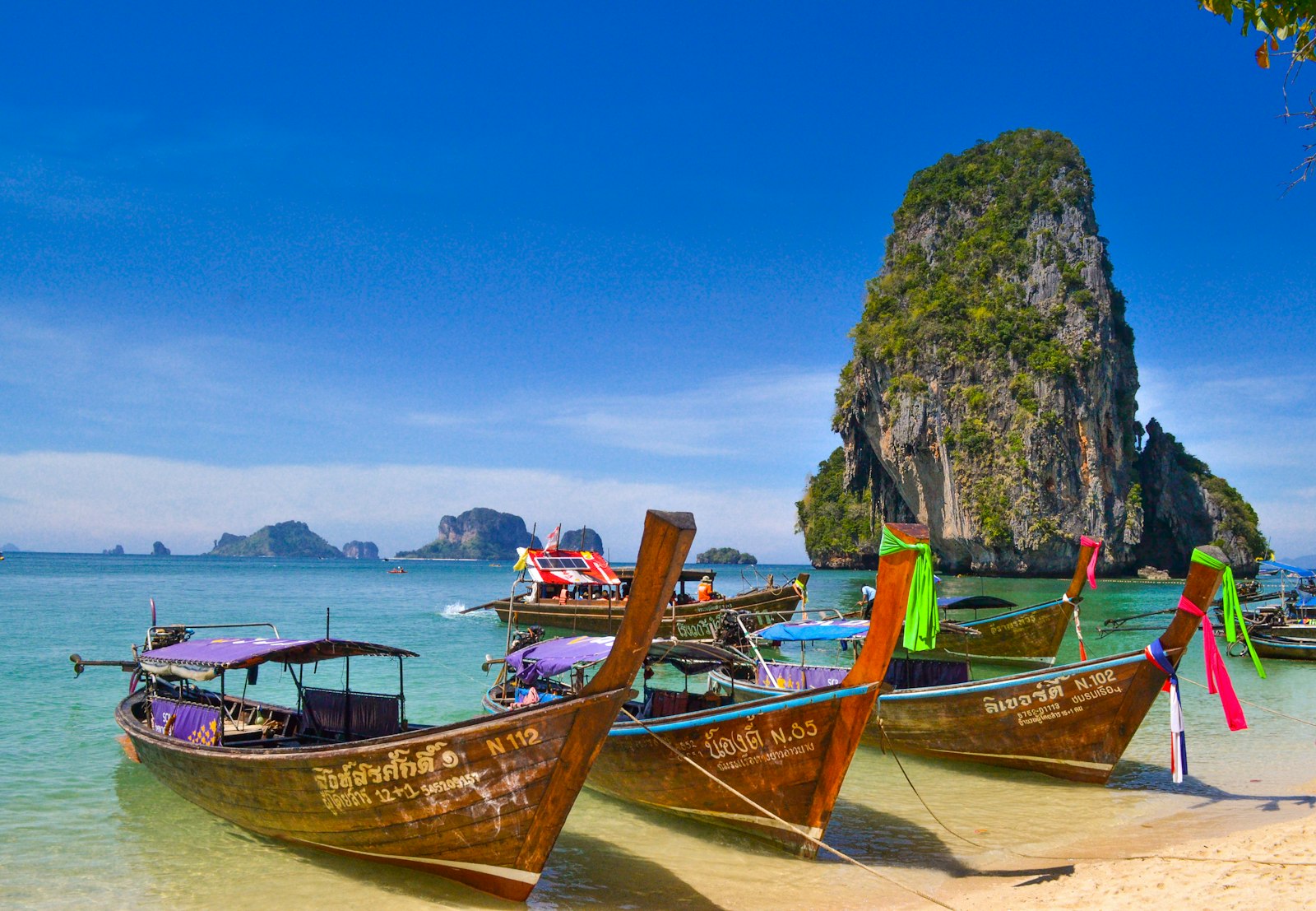
Thailand's cool season runs from about mid-November to late February, and it is the only stretch of the year when the whole country is comfortable at once. The monsoon has drained away, Bangkok drops from oppressive to merely warm, and the Andaman coast delivers the flat turquoise water that every photograph of Thailand is selling. The complication nobody mentions until you have booked: the Gulf islands run an opposite calendar, and Koh Samui's wettest months are precisely the ones the mainland calls perfect. Get the coast wrong and you spend the good season indoors.
What Does the Cool Season Actually Mean?
Cool is relative. Bangkok in December still runs highs around 88°F, but the humidity breaks and the evenings fall into the low 70s, which is the difference between walking the city and surrendering to taxis. The rain essentially stops — November through February is the driest run of the year on the Andaman side — and the light turns clear enough that the temple rooflines along the Chao Phraya read properly for the first time. Thais treat December and January as peak, European and American visitors arrive in force over the holidays, and rates respond. The reward for the crowd is a version of the country that works from breakfast to midnight without a weather plan.
Which Coast Should You Actually Pick?
This is the decision the trip turns on, and it is genuinely counterintuitive. The Andaman coast — Phuket, Krabi, Phi Phi, Khao Lak — is dry from November to April, which lines up neatly with the cool season and is why it carries most of the high-end resort inventory. The Gulf coast — Koh Samui, Koh Phangan, Koh Tao — sits on the other side of the peninsula and takes its monsoon from roughly October to December, peaking in November. A Samui trip in late November can mean genuinely heavy rain during the exact fortnight the Bangkok forecast is flawless. Samui's own best months are February through August, which makes it the right island for a February trip and the wrong one for Christmas. If your dates are fixed in November or December, go Andaman. If you are flexible into February, Samui opens up and the mainland is still excellent.
Bangkok Is Not a Layover
Three nights, minimum, and in the cool season it is the best-value luxury city in Asia. Banyan Tree Bangkok on South Sathon runs about $238 a night with the Vertigo rooftop and Moon Bar sixty floors up — a rate that would not buy a mid-tier room in most European capitals. Shangri-La Bangkok, on the river beside Saphan Taksin, is the classic riverside address and comes in around $227, which puts a five-star river-view room inside the price of a business hotel elsewhere. Millennium Hilton Bangkok sits across the water in Khlong San with a 20-metre infinity pool and the ThreeSixty lounge, and it is the clearest illustration of how flat this market is: $173 a night in mid-September, $257 in mid-November, $190 in mid-December. Even the peak weeks barely move, because Bangkok has enough five-star supply that no single season can squeeze it.
Where to Go When You Leave the City
Krabi and the Railay peninsula give you the limestone karsts rising straight out of the water, reachable only by longtail boat, and they are the single most distinctive landscape in the country. Khao Lak, an hour north of Phuket airport, trades nightlife for long empty beach and is the right call if the resort is the point. Chiang Mai in the north is a different trip entirely — 60°F mornings in December, temple architecture that predates anything in Bangkok, and the mountain food of the Lanna kingdom — and it pairs better with Bangkok than any beach does. On the Gulf side, Garrya Tongsai Bay Samui holds a private bay on the island's north-east shore at about $524 a night in February, which is the month to do it.
Eating, Briefly and Seriously
The best food in Thailand costs almost nothing and is eaten standing up. In Bangkok that means the stalls of Chinatown along Yaowarat Road after dark, the boat noodles at Victory Monument, and any street-side som tam stand with a queue of office workers. The country also has a serious fine-dining scene now: Le Du and Sorn in Bangkok both work with southern Thai and heirloom regional ingredients at a level that stands against anything in Asia, and both need reservations months ahead in the cool season. The correct approach is to book one of them and eat everything else off the street, which is also what the chefs do.
Getting There and Moving Around
Bangkok Suvarnabhumi (BKK) is the hub, with nonstop service from the US West Coast and one-stop routings from everywhere else through Tokyo, Seoul, Doha or Singapore. Internal flights are cheap, frequent and the correct way to reach the islands — Bangkok to Phuket or Krabi is under ninety minutes, and Samui has its own airport. Long-haul is where the budget is decided, and the approach in our guide to flying business class for less works particularly well on these routes, where Gulf and Asian carriers compete hard. Inside Bangkok, the BTS Skytrain and the river boats beat taxis at rush hour by a wide margin.
What It Costs
Less than it should. A five-star Bangkok room in the cool-season peak runs $190–260 a night, an Andaman beach resort of real quality sits in the $300–600 range, and Samui in February lands around $424–524 at the top end. Internal flights are $40–90. The genuine expense is the flight in and whatever you do about it. Budget for a private long-tail day out of Krabi and one serious tasting menu, and the rest of the trip costs materially less per day than a comparable week in southern Europe — with better weather in the month Europe has none. If you want the same shoulder-season logic applied to a different part of Asia, our Bali shoulder-season guide covers the equivalent trade there. When your dates are set, check live Bangkok availability — the holiday fortnight is the only stretch that genuinely tightens.
Frequently Asked Questions
When exactly is Thailand's cool season?
Mid-November through late February on the mainland and the Andaman coast, with December and January the driest and most comfortable. Temperatures in Bangkok still reach the high 80s; what changes is the humidity and the rain, not the thermometer.
Is November a good time for Koh Samui?
No — November is Samui's wettest month. The Gulf islands take their monsoon roughly October to December, opposite to the Andaman coast. Visit Samui from February to August, and choose Phuket, Krabi or Khao Lak if your trip falls in November or December.
How many days do you need in Thailand?
Ten to fourteen. Three nights in Bangkok, five or six on one island or beach, and the balance in Chiang Mai or a second coastal stop. Trying to combine both coasts in under two weeks means spending the difference in airports.
Does Thailand get expensive over Christmas?
Island resorts do, sharply — the last two weeks of December can run double the November rate and often carry a compulsory gala dinner. Bangkok barely moves, which is why a city-heavy itinerary is the value play over the holidays.
Is Bangkok worth more than a night?
Three nights, and it is the strongest argument in the itinerary. The food, the river, the temples and the rooftop bars are all better than their reputation, and five-star rooms cost roughly what a mid-tier hotel costs in Europe.