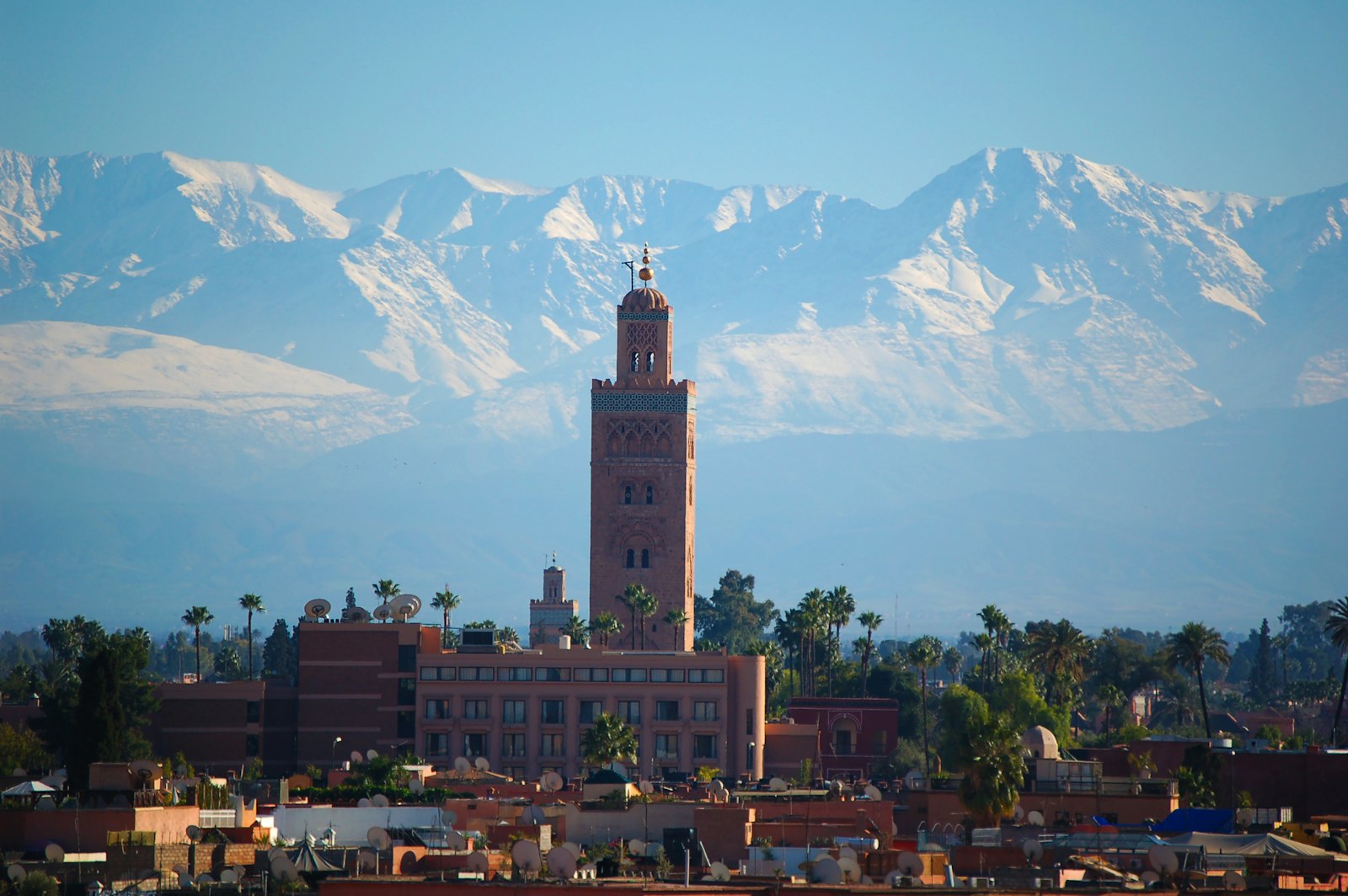
October through February is the best time to visit Morocco, and it is the country's real high season. Afternoons in Marrakech settle around 65–68°F under skies that stay clear for weeks, the medina becomes walkable rather than survivable, and the High Atlas an hour south carries snow. The prices follow: Es Saadi Marrakech Resort — Palace quotes $618 a night in late August and $1,183 by the third week of November. The August rate is not a bargain. It is compensation for 100°F.
What the Cool Season Actually Delivers
Marrakech in July is a physical event — the heat clears 100°F by mid-morning, the souks empty into shaded courtyards, and the day trips that justify a week here become punishment. The cool months invert all of it. The Jardin Majorelle can be walked rather than queued through. The Saturday rhythm of Jemaa el-Fnaa, which in summer only starts once the sun is down, runs from late afternoon. And the light — low, hard, and gold off the pink pisé walls — is the light every photograph of this city is trying to be. Moroccans treat late December through early January as the top of the market and price accordingly, which is why booking early matters more than booking cheap.
How Cold Does It Actually Get?
Warmer than anywhere in Europe and colder than you have planned for. Daytime highs run 64–70°F from mid-October through February, with January the coolest month and rain arriving in short bursts rather than the all-day grey of a European winter. The number that matters is the overnight low: 42–48°F, and occasionally into the 30s. Riads are built around open courtyards to move hot air out in summer, which is exactly the wrong architecture in January, and a startling number of beautiful ones have no real heating. Confirm heating in the specific room you are booking rather than the property's amenity list, and ask whether it is central or a portable unit. That single question separates a comfortable stay from an evening spent in a coat.
Riad or Resort?
A riad puts you inside the medina, thirty seconds from the noise, with four or five rooms around a courtyard and a rooftop for breakfast. A resort in Hivernage or the Palmeraie gives you space, a heated pool, and a fifteen-minute taxi each way. For a week in the cool season the honest answer is one of each. La Maison Arabe is the reference riad — Bab Doukkala, ten minutes on foot from Jemaa el-Fnaa, a heated garden pool, a hammam, and cooking workshops that are the best structured introduction to Moroccan food in the country. La Sultana Marrakech sits in the Kasbah beside the Saadian Tombs, Moorish and dark and heavy in the best way, with a rooftop that looks straight at the Atlas on a clear morning. For the other half, The Oberoi Marrakech stands in olive groves outside the city and is the most serious luxury property in Morocco by most measures, and Es Saadi holds eight hectares of park in Hivernage with a 3,000 m² spa — which is exactly what you want after three days on medina cobbles.
The Atlas Mountains Are the Argument
This is the case for the cool season that nothing else makes. Jbel Toubkal, the highest peak in North Africa at 13,671 feet, holds snow from December into spring and is visible from Marrakech rooftops on a clear day. Oukaïmeden — Africa's highest ski resort, topping out above 10,000 feet — is under two hours by road, and skiing in the morning before a tagine in the medina that night is a day that works nowhere else on earth. If skiing is not the plan, the Ourika Valley is an hour out through Berber villages and waterfalls, and the Agafay desert forty minutes west gives you stone-desert landscape without the eight-hour drive to Merzouga. In July these trips are endured. From November they are the reason to come.
Eating in Marrakech
The best meal of the trip will probably be on a rooftop or inside a riad rather than at a restaurant with a sign. Al Fassia is the exception worth planning around — women-run, in Gueliz, and the definitive version of the classic Moroccan repertoire rather than a modernised reading of it. Nomad, on a medina rooftop above the spice square, does contemporary Moroccan cooking that earns its crowd. Dar Yacout is theatre as much as dinner, in a restored palace, and worth exactly one night for that. Book all three ahead: the cool season is busier than visitors expect and the rooftop tables go first.
Getting There and Getting Around
Marrakech Menara (RAK) is four miles from the medina and served directly from most major European hubs, which makes a one-stop routing from the US straightforward through London, Paris or Madrid. Royal Air Maroc also flies nonstop from New York into Casablanca, three hours north by train. The transatlantic leg is where the cost of this trip is decided, and the tactics in our guide to flying business class for less apply cleanly to the Europe–Morocco routings. In the city, walk the medina and take petits taxis for everything else — agree the fare before the door closes, or ask for the meter.
What It Costs
Morocco is one of the last places where genuine luxury has not fully repriced, but the cool-season premium is real and worth planning around. Es Saadi's Palace runs roughly $640 a night in mid-November and $1,183 in late November — the same hotel, the same month, nearly double. Mid-January comes in around $771. That spread is not random: it tracks European school holidays and the run-up to Christmas, and moving your dates by ten days is worth more than any negotiation. Riads sit well below resort rates, and the gap between a good riad and a spectacular one is small enough that the spectacular one is usually correct. Budget separately for a private driver on the Atlas days, and for a proper hammam — not a spa treatment so much as the local approach to being clean. When your dates firm up, check live Marrakech availability, because the best riads have five rooms and the cool months fill first.
Frequently Asked Questions
Is Morocco too cold in January?
No. Days run 64–70°F and mostly sunny, warmer than anywhere in Europe at the same time of year. Nights drop to 42–48°F, so pack layers and confirm your room has heating — that, not the daytime temperature, is what decides whether a January stay is comfortable.
How many days do you need in Marrakech?
Five nights. Two cover the medina, the souks and the Majorelle and Yves Saint Laurent museums; the other three buy an Atlas or Agafay day, a hammam afternoon, and the unhurried pace that is the actual point of staying in a riad.
Can you really ski in Morocco?
Yes. Oukaïmeden, above 10,000 feet in the High Atlas, is under two hours from Marrakech and holds snow from roughly January through March. The infrastructure is basic by Alpine standards and conditions vary year to year, so treat it as a remarkable day out rather than a ski holiday.
When is the cheapest time to visit Morocco?
July and August, by a wide margin — roughly half the November rate at the same hotel. It is cheap because daytime temperatures clear 100°F and the medina becomes an endurance test. The genuinely good value is early October or early December, either side of the peak weeks.
Riad or hotel for a first visit?
Riad, for at least part of the stay. A resort in Hivernage or the Palmeraie is more comfortable and has the better pool, but the medina is why you came, and staying inside it turns the trip from sightseeing into something closer to living there for a week.