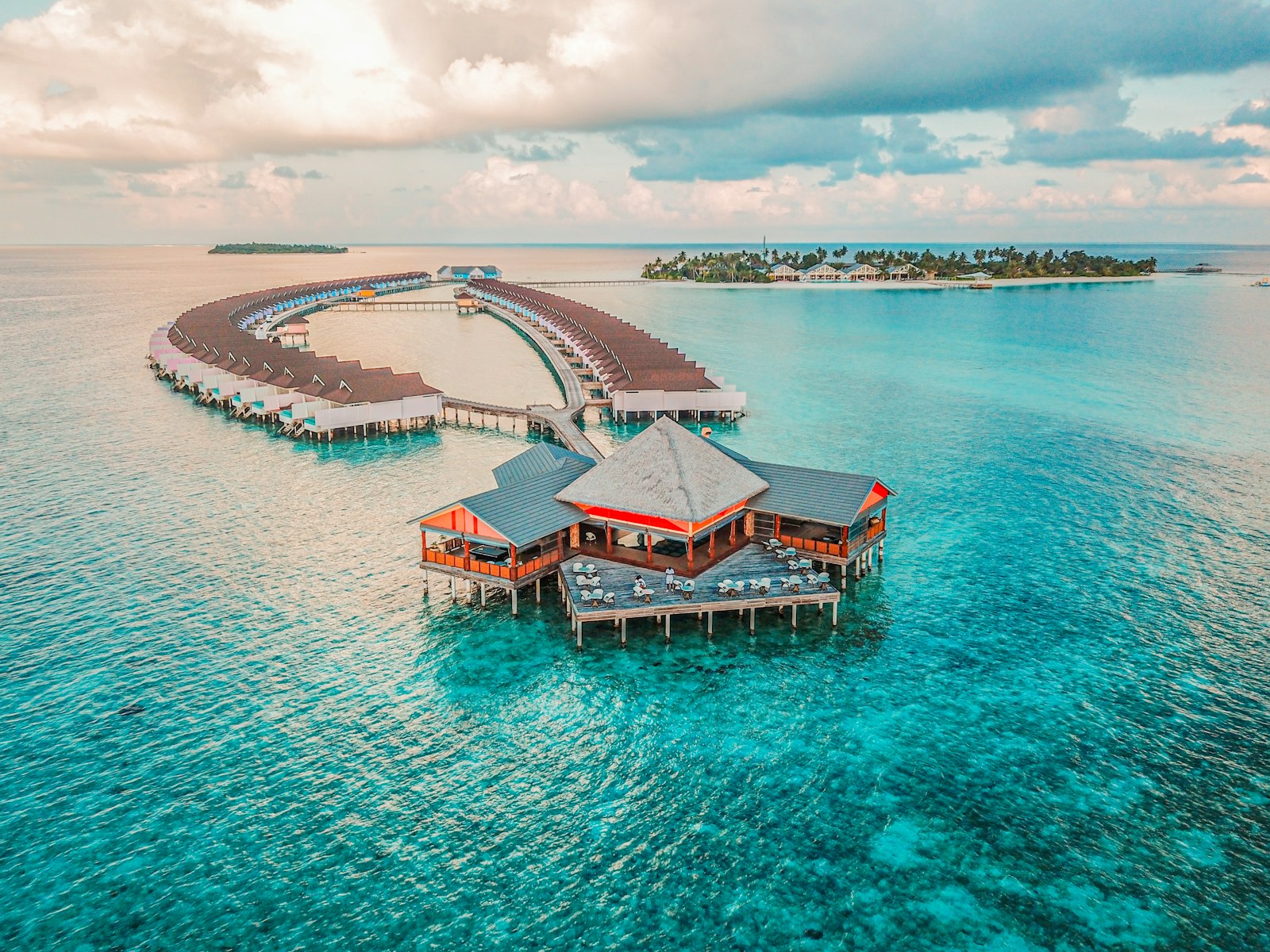
The Maldives Promise
The photographs are real. The water is exactly that color. The overwater villa experience is genuinely unlike anything else in travel. The Maldives delivers — but it delivers most completely to travelers who understand what they are buying and choose accordingly. The number of people who spend significant money and come home mildly disappointed is higher than the brochures suggest. The gap between a great Maldives trip and an average one is almost entirely in the planning.
Choosing an Atoll
The Maldives is 26 atolls spread across 800 kilometers of Indian Ocean. Where your resort sits matters enormously. North Malé Atoll is closest to the airport — 20-30 minutes by speedboat — and contains some of the best properties. The tradeoff is that it also gets the most traffic. South Malé Atoll is 45-60 minutes by speedboat and markedly quieter. For the best dive sites and most remote feel, Baa Atoll (UNESCO Biosphere Reserve, home to the manta ray aggregations at Hanifaru Bay) and Ari Atoll require seaplane transfers of 25-40 minutes — expensive, spectacular, and worth it if diving or marine life is a priority.
Overwater Villa vs. Beach Villa
The overwater villa is the Maldives signature experience and it is everything you expect — direct ocean access from your deck, glass floor panels, the sound of the water at night. But beach villas at the right resort are not a compromise. They offer more indoor-outdoor living space, lush garden privacy, easier beach access, and often better snorkeling directly off the sand. Several of the finest resorts — Cheval Blanc Randheli, Soneva Fushi, and Six Senses Laamu — have beach villas that outclass the overwater options at lesser properties. Do not let the overwater category be the only criterion.
The Resorts Worth the Price
Soneva Fushi on Baa Atoll is the benchmark: 65 hectares of jungle island, barefoot luxury philosophy executed without compromise, extraordinary marine life, and a culture of genuine hospitality that larger chain resorts struggle to replicate. It is expensive. It is worth it. For a more contemporary aesthetic, Patina Maldives on Faarufushi combines exceptional design with a multi-restaurant concept and service that regularly outperforms properties charging more. Cheval Blanc Randheli is the choice for those who want a true luxury hotel experience rather than an eco-lodge feel — highly staffed, immaculate, with a CHEVAL SPA that is among the finest in any resort category. For families, Soneva Jani on Noonu Atoll has slide-equipped overwater villas that make the word "family" feel inadequate — it simply looks like a film set.
What to Actually Do
The Maldives is not a sightseeing destination. Activities are centered on the water: snorkeling house reefs (the best are at Soneva Fushi, Four Seasons Landaa Giraavaru, and Gili Lankanfushi), diving (Ari Atoll for whale sharks, Baa Atoll for mantas), sunset dolphin cruises, and sandbank picnics. Most resorts have excellent dive centers. If marine life is central to the trip, coordinate your visit with Hanifaru Bay's manta season (June–November) or the whale shark season in South Ari Atoll (year-round but strongest January–April).
The Real Cost Breakdown
A week at a mid-tier luxury Maldives resort — solid property, overwater villa, half board — runs $8,000–14,000 for two people including flights. Top-tier resorts (Soneva Fushi, Cheval Blanc, Four Seasons Landaa) add another $3,000–8,000 for the same trip structure. The seaplane transfer adds $400–600 round trip per person. Meals beyond the included plan are expensive — budget $150–300 per dinner for two at resort restaurants. The all-inclusive option, offered at many properties, is worth calculating carefully: at resorts with strong food and beverage programs it consistently comes out ahead.
When to Go
November through April is peak season — lowest rainfall, calmest seas, best visibility for diving. The sweet spot for value without significant weather compromise is May and October, the shoulder months. The wet season (May–October) brings lower rates but also afternoon rain, rougher seas in some atolls, and more variable diving conditions. The rain comes in short bursts rather than all-day downpours — many travelers find it entirely manageable. Whatever you do, avoid booking over the Christmas and New Year period unless you enjoy paying double for the same experience.